
“We spent a fortune on that website. The photographs of the harbour, the conference room, the antiques” I have seen the photographs on the website, and they are absolutely exquisite. The trouble is that the newest visitors to a website cannot see them at all.
Law firms tend to invest eye-watering sums in polished, designer websites, and rightly so. What a human visitor sees must stay engaging, professional and inviting. But a new kind of visitor has arrived, and sadly it does not admire the imagery, soak up the atmosphere or sense the quality of the design. The newest visitor is an AI system, and it goes straight round to the back of the website.
Think of it as the difference between an estate agent's brochure and a surveyor's report. The brochure sells the view. The surveyor lifts the floorboards, checks the wiring and asks when anyone last looked at the roof. AI systems are surveyors. They read metadata (the hidden labels that describe each page), the internal links, author information, location signals, reviews, structured data and the way a site is published and updated. In short, they read the back end, or, as I have come to call it, the website's posterior.
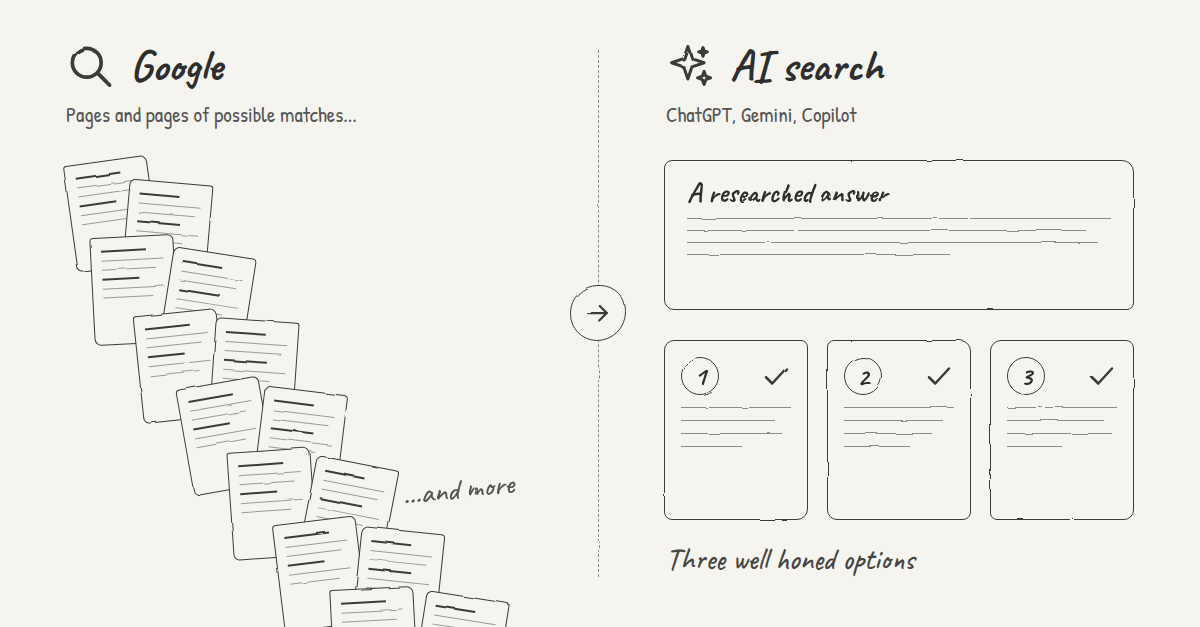
A perfectly pristine posterior tells an AI system what one’s firm does, where it practises, who is qualified to advise, and why its information can be trusted. That matters more with every passing month as every day more and more clients now use ChatGPT, Gemini and Copilot alongside, or instead of, a Google search. Google hands out a page of possible results and leaves the end user to decide. An AI search does that bit. It researches, summarises the issues and offers a small number of tailored options. The question no longer is “do we appear?” It has become “are we one of the few names the AI is prepared to recommend?”
Answer Engine Optimisation
Answer Engine Optimisation, or AEO, simply means answering the client's question clearly and early, whether they type it into Google, read it in a Google AI Overview or ask it aloud to their phone.
For a law firm, this means:
- Giving a clear answer near the beginning of a page;
- Using helpful, descriptive headings;
- Answering the obvious follow-up questions;
- Explaining legal terms in plain English;
- Naming the relevant jurisdiction;
- Stating any important limits, qualifications or exceptions.
The aim is not to dumb down legal advice. It is to make reliable information easier to find and easier to understand.
Generative Engine Optimisation
Generative Engine Optimisation, or GEO, is its close cousin. It helps tools such as ChatGPT, Gemini and Copilot understand, describe and recommend a firm accurately when a client asks, “Whom should I instruct?”
The principles are refreshingly old fashioned. Publish original, accurate and well supported content. Write for clients, not for algorithms. Show genuine expertise in the areas in which one actually practises. The clearer and better evidenced the information, the firmer the ground the AI stands on when it speaks about the firm.
E-E-A-T and Trust
Then there is Google's E-E-A-T framework: Experience, Expertise, Authoritativeness and Trustworthiness. Choosing a lawyer is a high-trust decision, and clients, search engines and AI tools all need to know:
- Who the firm is;
- What it is qualified and authorised to advise on;
- Where it practises;
- Which lawyers have relevant experience;
- Why its information can be relied upon.
No-one instructs a stranger. Neither, it turns out, does a machine.
Putting It All Together
The strongest approach is an integrated one:
- SEO (Search Engine Optimisation) helps people find the website;
- AEO helps the website answer questions clearly and directly;
- GEO keeps information accurate and understandable when AI tools retell it;
- E-E-A-T provides a framework for showing credibility and trust;
- External validation, such as reputable directory listings, professional recognition, authoritative citations and consistent third party profiles, adds independent context;
- A well managed blog gives the firm a responsible, ongoing way to explain developments in the law and show its knowledge over time.
The goal is a website whose structure, content, authorship, links and outside evidence make a firm's real authority easy to verify. That is the behind the scenes work that turns an online brochure into a lasting source of useful, trustworthy information.
The Posterior, Examined
Much of this happens where no visitor ever looks. The back end of a website includes its content management system, page titles and meta descriptions, heading structure, web addresses and redirects, image descriptions, XML sitemap (a map of the website's pages drawn up for search engines), structured data or schema markup (labels that tell a machine “this is a barrister, this is her address”), analytics, security settings and page load speed. Search engines and AI systems use every one of these to interpret, assess and retrieve a firm’s content.
Then there is the quieter layer of trust too: clear biographies for the lawyers who write or review content; sensible links between related practice areas and articles; accurate lawyer profiles; the same contact and location details on every platform; visible publication and update dates; and links to reliable, authoritative outside sources.
A good website now does two jobs at once. Human visitors should find it clear, welcoming and compelling. AI systems should find it structured, evidenced and easy to trust. The most effective law firm websites manage both.
Your next client may not find you through a traditional Google search. They may ask an AI tool who is best placed to help. I help Hong Kong law firms be visible where that decision is increasingly being made: in search results, direct answers and AI recommendations. Contact me for a complimentary website audit and I’ll take it from there. Caroline.
Caroline Langley is a barrister and HKMAAL accredited mediator at Justice Chambers, Admiralty, with more than thirty years at the Bar across four jurisdictions, and the founder of Just Law Education. Read more about Caroline.
This article first appeared on LinkedIn.